9,000 MILLION YEARS AGO
The solar system was born from a fraction of interstellar gas and dust after a large ancient star underwent a massive supernova explosion.
4,500 MILLION YEARS AGO
All the planets in the early solar system formed a round hot ball of red, steamy molten rock around a heavy iron-rich and dense core with smaller amounts of silicon, magnesium, oxygen, and other elements. Where the mass of the planets reach a minimum level, at atmosphere formed around the molten rock.
On Earth, the percentage of each element used to build the molten rocky core of the planet is roughly 32 per cent iron, 30 per cent oxygen, 16 per cent silicon, and 15 per cent magnesium. The remaining 7 per cent are all the other elements such as hydrogen, carbon, phosphorus, nitrogen, zinc, titanium, uranium etc.
Surrounding the molten rock of the Earth was a gaseous atmosphere formed predominantly by icy comets colliding on the surface and to a lesser extent from gas emerging out of the planetary interior. This created an initial composition in the atmosphere of around 5 billion years ago of carbon dioxide, nitrogen, water vapour, and to a lesser extent methane, ammonia, and the noble gas neon. Researchers have estimated that CO2 made up a significant portion of the ancient atmosphere, with computer models suggesting this gas could have constituted anywhere from 6% to over 70% of the early atmosphere. Analysis of iron micrometeorites found in ancient soils indicate that CO2 comprised anywhere between 25% to 50% of Earth’s atmosphere around 2.7 billion years ago. Before 2.7 billion years ago, this figure was probably higher. Apart from that, there is no surprise to the scientific community to see that the early atmosphere at this time was free of oxygen mainly because life had not yet established a foot hold on the Earth. This is way too early. As for atmospheric density, there are no precise density measurements for the early atmosphere of 4.5 billion years ago. Some studies have calculated the likelihood that the Archean atmosphere (4 to 2.5 billion years ago) was almost ten times denser than today. However, this density estimate is indirect and not universally agreed upon.
The bringing together of these elements in the ancient interstellar dust and gas clouds to form the planets initially started through the action of electrostatic forces, which is essentially radiation pressure pushing on the charges according to Einstein's Unified Field Theory. Variations in the number of electrons orbiting the atoms in different materials can help to vary the electrostatic force being applied, which can either push matter together (an attractive force) or push them apart (a repulsive force). This is because the radiation's energy density is decreased or increased through constructive or destructive interference of the electromagnetic energy by like (i.e. + +, or - -) or unlike (i.e., - +) charges, respectively. But for matter to come together, most of the force is attractive in nature. Later, as more materials combine, the electrostatic forces place less of a role and soon the electromagnetic shielding effect of the mass creates an imbalance in the radiation pressure causing a reduction in the radiation energy density between matter. Then the matter are pushed together by radiation from the universe. However, for 20th century physicists, it is more a case of sticking to the original concept they are familiar with and want to remember the great man who first suggested it — Sir Isaac Newton. Therefore, this force that brings matter together naturally is described as the gravitational force. So as the electric charge on the surfaces of matter balances itself out on a larger scale, the gravitational field apparently takes over in "pulling" matter together.
As a result of these forces, the planets of our solar system came to exist within the first few million years after a portion of this massive interstellar gas and dust had already swirled around a much heavier object, which we now understand it to be the Sun.
Is there evidence to support this "red hot ball" view of the early Earth at this time? A rather pertinent question considering there are enough religious Christian people out there who still believe from the Bible that the Earth was created by God nearly 6,000 years ago. Better to get these people sorted right at this early stage before things get out of control. Fortunately, there is clear and direct evidence to support this seemingly radical scientific view. It all lies with certain long-lived radioactive elements. Due to the incredibly long-lived nature of a select range of radioactive elements, such as tungsten, we know the persistent nature of the radiation emitted by these elements is able to heat up other materials around them. Clearly there must have been a lot of heat in the early Earth. Therefore, it stands to reason that at the beginning of the formation of the planets, we should expect to see this heating up effect on rocks to have occurred to a significant degree in the core of planets and probably extending to near or at the surface as the concentration of these and other elements increased during the age when materials were coming together. Well, fortunately today, even after several billion years have past, scientists can confidently state that below the solid and cool rock and dust of the Earth's crust, we do have materials remaining in the molten state (i.e., very hot). Although this heat is caused by radiation (and, if you want to link this radiation to God, there is a way of doing so for those religious types), the scientific approach is to simply say that the radioactive elements are responsible for the heating and is prevalent inside the iron core of the Earth (and all the other planets). Perhaps the only thing out-of-whack here for the religious types is the time scale. At any rate, if you need more direct evidence of this, scientists have taken samples of the lava flows coming out of various volcanic eruptions and in other cracks in the Earth's crust seen today. This is the same molten material that existed at the beginning of Earth's history. And if religious types still don't believe the scientists, there is always the option to visit an active volcano and get inside one to see the lava up close and with your own eyes as direct proof.
Ouch, that's hot!
A peak was reached roughly about 100 million years after the solar system came into existence when the Earth's size stabilised. However, the Earth was either a bit bigger or smaller than it is today. Something else had to affect the mass of the Earth to bring it in line to what we see today.
4,470 MILLION YEARS AGO
The origin of the Moon is not quite as elegant and romantic as the Earth. Its existence came about from a more violent event.
After measuring the abundance of the isotope 182-tungsten in materials collected by Apollo astronauts in one of the solidified "magma" oceans on the Moon and checking to see whether there is a difference in its abundance compared to the Earth's own magma, scientists have discovered the Moon was created approximately 30 million years after the formation of the Earth even when taking into account errors in the measurement. Because the Moon does not have an iron core as the Earth does and yet both bodies have unusually similar compositions, scientists are lending their scientific weight in support of the theory that the Moon was probably created when a Mars-sized body collided with the Earth at this time, shearing off a reasonable outer chunk of the Earth. Fortunately the speed of ejection of the material was not enough to escape Earth's gravity. As a result, the ejected material quickly solidified and, together with various other much smaller collisions, eventually pushed it into a circular orbit around the Earth. Finally, the material's own gravity (or, to be more precise, the electromagnetic radiation from space exerting pressure through the radiation shielding effect) was sufficient to shape itself into a sphere but not enough to retain an atmosphere of its own (i.e., too small). Since then, various meteorites would hit the Moon and mould its surface to create the complex patterns we see of this body today.(2)
As for the Mars-sized body responsible for the geological carnage, it probably came back and got swallowed up by the Earth to reach its present size. Or do it travel fast enough to escape the Earth's gravitational pull?
As soon as the Moon was created and re-shaped itself into a smooth and molten sphere, it appeared much closer to the Earth than it does today. Current calculations suggest the Moon was 15 times bigger in Earth's sky.
Further observations of the Moon could reveal yet another interesting story. Researchers from the University of California in Santa Cruz (UCSC) has revealed a new computer model suggesting the likelihood of another body roughly one third the size of the Moon may have circled the Earth in a stable orbit.
The latest story began when recent lunar probes exploring the topography on the far side of the Moon discovered a thicker crust and an unusually elevated and highly mountainous terrain compared to the relatively low and flat lava plains of the Moon facing the Earth. Why the difference? Or as the scientists put it, why do we have an asymmetrical appearance for the Moon?
In order to find a reasonable explanation for this observation, Norwegian American planetary scientist Erik Ian Asphaug from the UCSC (and now working at Arizona State University) teamed up with a young talented UCSC postdoctoral researcher named Martin Jutzi where, during the course of their studies, discovered an interesting new computer model that could explain the observations. According to the new theory, a second moon may have formed at roughly the same time as the Moon we see today. The second moon managed to park itself in a stable position in the Moon's orbit known as the "Lagrangian" point. Mathematically there are two points, either 60 degrees in front or 60 degrees behind. The second moon stayed in one of these points. For roughly 80 million years, the two moons stayed in the same orbit as they moved around the Earth without influencing each other. Then, after 80 million years, the two moons slowly drifted away from Earth, and with influence from the Sun's gravitational tug, these two factors alone were enough to cause the smaller moon's position to destabilize and eventually revolve around the Earth at a different speed within the same orbit. As Asphaug said:
"The Lagrange points become unstable and anything trapped there is adrift." (Lovett, Richard. "Early Earth may have had two moons": Nature. 3 August 2011.)
It was only a matter of time before the smaller moon would collide with the larger one. When it finally took place, the smaller moon crashed into its larger sibling in what the researchers claim was probably the slowest possible collision for two massive bodies of this kind, allowing the materials to be splattered and raised to form the mountainous regions on the far side of the Moon. As Asphaug said:
"This is the slowest possible collision the two massive bodies could have if they fell into each other's gravity." (Than, Ker. "Earth had two Moons, New Model Suggests": National Geographics. 3 August 2011.)
Despite the slow speed, there was enough energy to eject trillions of tons of lunar debris into space. For the next million years, Earth would be showered by some of this debris.
While the new theory looks convincing, it still does not explain the unusually high levels of aluminium found on the far side of the Moon. Until then, scientists can only speculate on what happened. For further details, check out the article from the Nature journal. (3)
4,500 to 4,350 MILLION YEARS AGO
Looking closer to our planet, we can see how as the surface cooled to form the Earth's crust over the next 150 million years since the Earth had formed and reached its new peak size, gases trapped in the planet's interior and from considerable quantities of icy comets (4) crashing to the Earth were released and held gravitationally (or electromagnetically to be more accurate by the universal background radiation) in place to conceive the Earth's atmosphere consisting mainly of nitrogen, methane, ammonia, hydrogen sulphide and hot water vapour.
This view for the formation of the Earth's atmosphere is confirmed by Dr. Sten Odenwald (Raytheon STX) for the NASA IMAGE/POETRY Education and Public Outreach program:
"Nitrogen-rich and water-rich compounds are common in interstelar clouds which contain formaldehyde, ammonia, methane, water and other molecules. Comets are samples of this primitive matter, and the young earth accreted from a cloud that was very very rich in water and nitrogen-rich compounds just like interstellar 'molecular' clouds are known to be. So the early atmosphere was very rich in these molecules, however, after the sun went through its T-Tauri phase, it stripped the earth of these early molecules, so we think that the way nitrogen and water got back to the earth to form the second atmosphere is through comet bombardments when the earth was still less than 1 billion years old."
The process of outgassing from Earth's interior has persisted to this day but in much lesser quantities, known as volcanism.
The great oceans of water would principally come from the countless numbers of impacts from icy comets and to a lesser extent for internal outgassing. Upon hitting the molten rock, the ice would turn to vapour. The gas then filled the atmosphere. As air pressure increased in the cooler atmosphere, the gas recombined mainly around any solid dust particle or large molecules floating in the air. A liquid formed and became heavy enough for "gravity" to pull the liquid back to the surface.We call this rain.
There is a scientific theory going around the traps at the moment that the origin of the oceans of the Earth allegedly first began after the collision of a Mars-sized planet with the Earth to form the Moon. Assuming this is true, a considerable amount of water vapour would have escaped the interior of the planet. Even so, would it have been enough to produce the water in the oceans we see today? Probably not. We may need to combine this theory with the knowledge that millions of icy comets had already collided with the planet. Once we do this, scientists have quickly realised how easy it is to explain the origin of all the water on the surface of the Earth (a rather simple and quick scientific calculation). Nevertheless, there is still one tiny problem in all of this deductive work: water as we know it in the liquid state was not apparent even just prior to 3.8 billion years ago. The surface of the Earth remained too hot to permit water to stay in the liquid state. Until liquid water became a reality, scientists remain fairly certain that the Earth's surface was covered with a hellishly thick atmosphere of hot water vapour and other gaseous elements (the ultimate and biggest Swedish sauna the world has ever seen).
In the meantime, one could observe in those ancient days the very large Moon still showing signs of lava flow in various low-lying valleys. Today, the remnants of those great lava flows can be seen in the darker and softer regions of the Moon after they cooled down and were grounded to smaller rocks and dust by meteorite impacts.
3,800 - 3,700 MILLION YEARS AGO
The surface of the Earth was cooling down.
Oldest known rocks on Earth had been found from Greenland in early samples. However, scientists now believe the oldest rocks in the world are to be found in Western Australia.
The essential technique for dating rocks has been done by taking a sample of rock and measuring the proportion of radioactive rubidium-87/potassium-40 and non-radioactive strontium-87/argon-40 elements (i.e., the final products in the incredibly long radioactive decay process), respectively.
When the Earth's surface finally cooled sufficiently to allow water to turn into the liquid state and stay that way on the ground, all it took was for water vapour in the atmosphere to condense and fall as rain for at least 60,000 years to form the great oceans of the world.
As the rains generously poured from the heavens in the form of heavy droplets to create the biggest and permanent global flood in Earth's history known as the oceans (and no, this wasn't the time when Noah built his boat to protect his animals and close family members as some religious people might like to believe), the highly penetrating and disruptive ultraviolet rays from the early Sun and the great electrical storms in the early hazy atmosphere of Earth assisted in the dissemination of methane, ammonia and water into smaller and highly reactive molecular fragments called free radicals. As the energy briefly dissipated, these energised fragments would quickly reassemble near the surface of pools or inside tiny water droplets in the primitive atmosphere to form a variety of new, interesting and potentially more stable chemical molecules of increasing complexity.
Or one can imagine a similar event occurring not far from hot hydrothermal vents and over certain clay surfaces covering the floor of the early oceans and numerous shallow seas and lakes scattered throughout the ancient muddy, hot and humid desert-like continents of the world (remember, there were no plants growing anywhere). Under these extreme conditions of hot and cool and dry and wet, high water temperatures would help to break molecules apart into energised fragments. In other areas where the water cooled and near protected regions of certain clay surfaces, energised fragments would reassemble into various kinds of molecules. From experiments in recent times, scientists have discovered that some of these molecules were crucial to the development of life on Earth.
Then as the water in some pools began to evaporate between major rains, the concentration of these molecules increased, and so raising the probability of new and more complex molecules being formed under the right conditions. If not the heat, then the occasional lightning strikes on the water's surface would help re-energise the molecular fragments and create more complex and unusual molecules. Who knows?
Add to this the fourth complicating factor of icy comets surviving the fall to Earth and releasing their frozen cargo and it is possible another means of transferring vital chemicals or possibly primitive "alien" life by way of bacteria to Earth could also have started the process of life on Earth. Scientists are not entirely certain how much of a contribution this "extraterrestrial influence" could have had. It assumes that extraterrestrial life exists in the universe, that life can survive the long journey to Earth, and that certain catastrophic events will cause some bacteria from other planets to be suddenly trapped in ice and shot into space until through incredible luck the comet manages to reach and survive the plunge to the surface of an Earth-like planet. NASA scientists are currently investigating this possibility by understanding how long bacteria can potentially survive in extreme conditions such as ice and radiation. So far the evidence suggests there is no limit to how long bacteria can remain in suspended animation inside icy materials. They could potentially remain this way for literally billions of years.
Does this mean primitive extraterrestrial life in a state of suspended animation inside icy comets had seeded the Earth with life? It is possible. So far no scientist can prove it could not have happened. Whether or not this is true, one thing is certain: bacteria can survive in ice for a very long time. As we will learn later, not even the biggest ice age to hit the Earth for at least 25 million years was enough to wipe out all life on Earth. If anything, it just slowed things down and kept everything in the giant freezer until the right moment came when the ice melted and life could resume at its usual pace. Just a quick sleep and a sudden wake up and life continued virtually unabated.
So how did life actually begin on Earth?
In an attempt to resolve this mystery, scientists at NASA have been looking for evidence of alien bacteria inside some icy comets floating through space.
To find direct observational evidence to support this claim, NASA has sent a probe into space to collect some icy material from a comet. The analysis of the materials so far has not been conclusive. Perhaps it takes a vast number of icy comets (or to examine more deeply inside the comet) to find the one lonely alien bacteria lying dormant and frozen in the material waiting for its moment to come alive? So the next best thing available to the scientists is to check a place in the solar system where a vast liquid ocean of water may exist. We can cross off the Earth from the list. That is too contaminated with bacteria. One possibility is perhaps beneath one of the moons of Jupiter where an ocean of liquid water appears to exist beneath a solid icy surface. If so, NASA is excited by the prospects that it could find evidence of alien bacteria trying to survive in this vast ocean in another corner of our solar system.
While some scientists search for evidence of frozen alien bacteria in space and inside one of the icy moons of Jupiter, a NASA scientist has boldly suggested the likelihood that microbial life could be embedded in some extraterrestrial rocks rather than ice, albeit fossilized after discovering what looks like microscopic tubular structures reminiscent of earthworms here on Earth. The one thing going for the scientists in this area is the fact that the rock in which this structure was found had no opportunity to be contaminated by the Earth. The rock is known as a Carbonaceous Chondrite. A bit of a mouthful to pronounce, but for those interested, these are meteorites containing about one percent by mass of organic matter that resembles the crude oil or tarry substances found on Earth. Although no extraterrestrial organism has been found trying to crawl out of these rocks, the total amount of organic matter in the interior of these rocks is too high to be considered entirely due to contamination with the Earth, and must show the ease by which molecules can form inside the protective confines of certain porous rocks in space. However, does it mean we have found the first evidence of a fossilized extraterrestrial lifeform? Unless there are pockets of heated gases capable of pushing out the tarry material into tubular shapes before being fossilized, other scientists will need to study the evidence more carefully and determine whether it is possible for the same tubular structure to be replicated by natural means.(5)
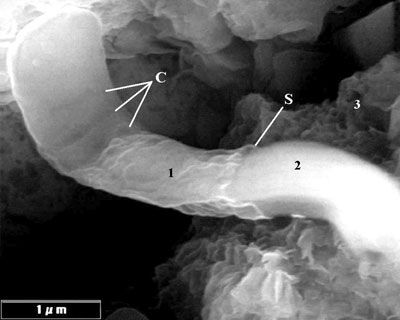
As interesting as all this may sound, the opposing argument is, of course, that life could have arisen here on Earth.
Among the important scientific work being conducted in support of this latter argument is one from Professor David Deamer of the University of California, Santa Cruz. He is currently working on the idea that bubbles (or vesicles as he calls them) could play a crucial role in the formation of the first single-celled organism on this planet. If he is right, bubbles could have formed regularly on the surface of certain types of clays containing the right metals to help attract a multitude of amino acids and help them form long chains of macromolecules called proteins. Because if enough of these proteins can be produced, the bubble could be reinforced by a protective protein-like membrane and so maintain the structure for a longer period of time, especially between periods when the rains would stop. Then it is just a question of how long before the first DNA-like molecule is created to help replicate this first living single-celled organism. Already evidence has been found that these clays can also create chains of nucleotides (the basis for building a DNA molecule).
For example, in 1977, while working at the National Aeronautics and Space Administration (NASA) Ames Research Center in California, USA, Dr James Lawless and a visiting scientist from Israel, Dr Nissim Levi, found evidence to support the 1947 claim made by British physicist Dr John Desmond Bernal (1901-1971) that ordinary clay can concentrate small chemical molecules in a hot "organic soup" and then act as a kind of prebiotic scaffolding for producing larger, more complex molecules at the very surface of the clay. Although most clays destroy a number of important amino acid structures, Lawless and Levi found that clays containing metals can attract certain amino acids and nucleotides without damage.
In particular, Lawless and Levi discovered two types of clays, one containing nickel and the other zinc, which not only attracts all the twenty amino acids found in living things on Earth and all the various nucleotides comprising DNA respectively, but which has been observed to form macromolecules of as many as eight amino acids and several chains of nucleotides. Longer, protein-like chains and DNA-like structures seem likely if given sufficient time for their synthesis.
Again, despite the fascinating in-roads made into this particular aspect of the origins of life on Earth, scientists are still aghast at exactly how long is required before the chains of nucleotides are long enough to store useful genetic information and, at the same time, be made to self-replicate in the right environment.
Or did life on Earth need a bit of a kickstart from a lonely little alien bacteria hitching a ride on an icy comet?
Never mind. To be conservative at this stage, scientists must assume life was somehow created here on Earth and not in the confines of space (especially since 20th century scientists had not found alien life with their own eyes as yet).
Therefore, it would have required an unimaginable amount of time to have passed during which time the process of dissemination and reassembling of molecules and the right surfaces, pressures and temperatures for making long chains of molecules continued unabated. Eventually, more and more complex molecules consisting mostly of fatty acids, sugars, tannins, amino acids and nucleic acid bases slowly accumulated near the surface of ancient clays existent beneath the hot springs (6).
Why was the water hot? One would logically assume that Earth's hot magma beneath the crust was doing this job. In fact, the real source of the heat was coming from the collision of enough asteroids with the Earth's surface. As some British scientists studying the Houghton crater on Devon Island, Canada, have found, there is evidence to suggest that asteroids crashing into the Earth can heat up the rocks, causing some rocks to vaporise while others develop tiny cracks as the rocks remain warm to hot for anywhere between 1,000 years and 1 million years. It is these cracks together with the heat of the rocks where some scientists believe life on Earth could have began.
As Dr Charles Cockell of the British Antarctic Survey in Cambridge said:
"What we've discovered is that rocks inside the crater are more heavily colonised by microbes than the rocks outside the crater. So what we have here is an example of how impact events can create a habitat for life and not merely act as agents of destruction." (7)
The world's biggest hot tubs to make those Norwegians truly jealous were literally bubbling away in many parts of the world.
Then suddenly, without warning (perhaps with the assistance of hydrothermal vents and a variety of new and interesting catalysts in the clays and in the water to help speed up chemical reactions (or the possibility always exist that one icy comet could have survived the plunge to Earth and released an alien bacteria not unlike the way a human embryo is fertilised by a sperm (8)), a massive macromolecule made of proteins and nucleic acids was brought to life which was able to make crude copies of itself from the rest of the molecules in the organic soup. This vitally important self-replicating macromolecule is the ancestor of Deoxyribonucleic Acid (DNA).
As scientists have not yet re-created the exact events, conditions, and acquired all the right materials in the laboratory as well as provide sufficient time in the experiment to see this important moment of creating a self-replicating DNA take place, there continues to be considerable controversy about how likely this event can occur. Even the Nobel laureate and discover of DNA, Sir Francis Crick, thought the probability of it happening was extremely small. So much so that he was prepared to consider a more extraterrestrial origin for the first DNA molecule to appear on Earth. He said:
"Life did not evolve first on Earth, a highly advanced civilization became threatened so they devised a way to pass on their existence. They genetically-modified their DNA and sent it out from their planet on bacteria or meteorites with the hope that it would collide with another planet. It did, and that’s why we’re here."
Nevertheless, as we will discover near the end of the Future epoch page, the Universe appears to be a much bigger and older place than anyone has imagined. It means that if anything is not quite impossible (even if it seems extremely unlikely), then no matter how small the probability might seem, there is more than enough time in the Universe for even the random events to create the near impossible outcome (although something is telling scientists not everything has random, but more directed with the help of the right chemicals and conditions). Even if many planets came and gone and did receive this material from outer space without much luck over billions of years to create the all-important DNA molecule to start life and eventually the planet is broken apart in a future supernova explosion, eventually at some point it will happen in time and space on some other world. Once the DNA finally appears, any advanced alien civilisation to evolve on the planet could decide to leave behind some DNA on another planet. Or even if the planet was split apart and destroyed and the civilisation is no longer around, any bacteria can be kept in suspended animation for an indefinite period of time inside ice or in cracks within rocks and be protected from the harsh radiation of space. While certain events are not described by scientists as absolutely impossible with a zero likelihood of success, then the event will happen in a universe that is large enough and old enough.
Of course, all this discussion of the seemingly impossible events surrounding the formation of ancient DNA assumes a purely random mathematical event of any old molecule from the icy cargo continuing its collision with other molecules and sticking together in any old way. In reality, scientists have observed certain chemical pathways that help to speed up the process to the creation of certain critical molecules needed in the formation of DNA and life in general. We only need to observe the relative ease by which amino acids can be produced in a laboratory and in space and the ability of certain metal-rich clay surfaces to help assemble chains of nucleotides to form a crude non-replicating DNA-like molecule, and amino acids to form proteins. So not everything is totally random or based on pure luck.
3,500 MILLION YEARS AGO
With a DNA molecule finally formed and making more directed use of the chemicals in the organic soup to assemble more copies of itself and find ways to achieve self-preservation in an unpredictable world with the help of other chemicals, we see eventually from the great turmoil of the early Earth the emergence of the first relatively stable single cell organisms. The organisms, looking like tiny, perhaps semi-opaque bubbles attached to clay surfaces and eventually floated around in the warm waters, consisted of a spherical-shaped protein membrane to protect the DNA molecule as it went about its incessant and rather important activity of replicating itself and crudely "learning" from its environment.
The oldest direct evidence of single cell bacteria can be seen fossilized inside rocks from Western Australia. The discovery was announced in 1993 by J. William Schopf of the University of California at Los Angeles, USA. (9)
3,400 MILLION YEARS AGO
Some of the earliest known fossilised evidence of ancient life on Earth appeared as nothing more than tiny single-celled microbes living around hot, deep sea hydrothermal vents. Dating techniques used at the time suggested these microbes were around 3,200 million years old. However, the suggested age of the oldest life on Earth has only been recently outdone by Dr Martin D. Brasier of Oxford University and a team led by David Wacey of the University of Western Australia after making an important discovery. As revealed in the study published in the journal Nature Geoscience on 22 August 2011, Brasier's team located the oldest sedimentary rock formation on the planet in a remote part of western Australia called Strelley Pool. On closer inspection of this formation considered the oldest shoreline in the world, scientists observed extraordinarily well-preserved tiny fossils of tubular microfossils lying between the quartz sand grains (a useful material to protect the delicate molecules from excess radiation in the environment thanks to its piezoelectric properties and the ability to reduce radiation energy density between opposite-charged quartz crystals under pressure from the weight of other materials on top). As Wacey and his team put it:
"We therefore identify them as microfossils of spheroidal and ellipsoidal cells and tubular sheaths demonstrating the organization of multiple cells."
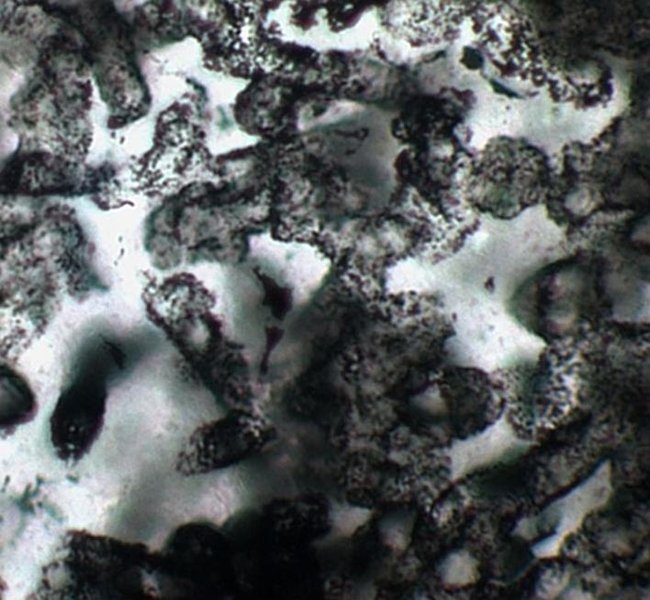
The age of these little critters has been dated to 3,400 million years old and with remarkably great accuracy. As Brasier said:
"We can be very sure about the age as the rocks were formed between two volcanic successions that narrow the possible age down to a few tens of millions of years. That's very accurate indeed when the rocks are 3.4 billion years old."
Brasier naturally painted a hellish picture of the early Earth at this time. He thinks that as the microbes began to carve out an existence the sky was constantly cloudy and grey and acted as an effective heat trap (and a protection from excessively high-frequency UV radiation) despite the Sun being slightly smaller and weaker at the time than it is today. The oceans were like a giant hot bath with temperatures hovering around 40 to 50°C both day and night.
And the extremely low levels of oxygen in the air made it likely these microbes relied heavily on sulfur compounds for food as well as the water for a good drink; and why not a good bath too to get rid of those waste products (only to be turned into gold for another type of lifeform as we will discover soon). Indeed, the presence of pyrite crystals in the sandstone are thought to be a metabolic sulphur reducing by-product of the living cells. Hence it is likely the oldest living things on Earth were sulfur metabolising bacteria. As the team stated:
"We interpret the pyrite crystals as the metabolic by-products of these cells, which would have employed sulphate-reduction and sulphur-disproportionation pathways."
3,200 to 3,400 MILLION YEARS AGO
The first microscopic single-cell organisms multiplied rapidly. Eventually, a time came when the "food" supply consisting of the freely available organic molecules (including sulfur compounds) in the pools dwindled and the need for a more dependable source of food became increasingly more important for these tiny organisms.
At first, perhaps being situated close to an ocean or large shallow inland sea, a number of these single cells found their way from the pools into larger and deeper waters. This may have helped the cells to find more food and a reliable source of water.
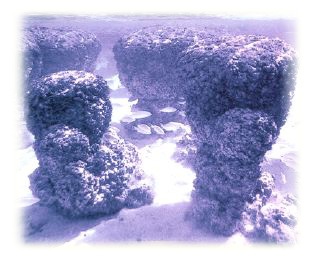
However, after many more millions of years had passed, one of the single cells just happened to stumble across an important molecule called chlorophyll (10) which could trap the free and reliable energy from the sun and use it as a means of breaking down the highly abundant carbon dioxide in the Earth's atmosphere for food rather than depending entirely on basic chemical building blocks already formed and waiting to be collected in the oceans. We call these chlorophyll-loving single-cell organisms the first plants to appear on Earth. The highly primitive plant life probably looked very much like blue-green algae which still exists today, but they were not blue-green algae at all. Rather, the first plant cells to appear on Earth were actually photosynthesizing bacteria (even more primitive than the algae we are familiar with today).
Scientists would call these primitive plant life by the more technical name cyano-bacteria.
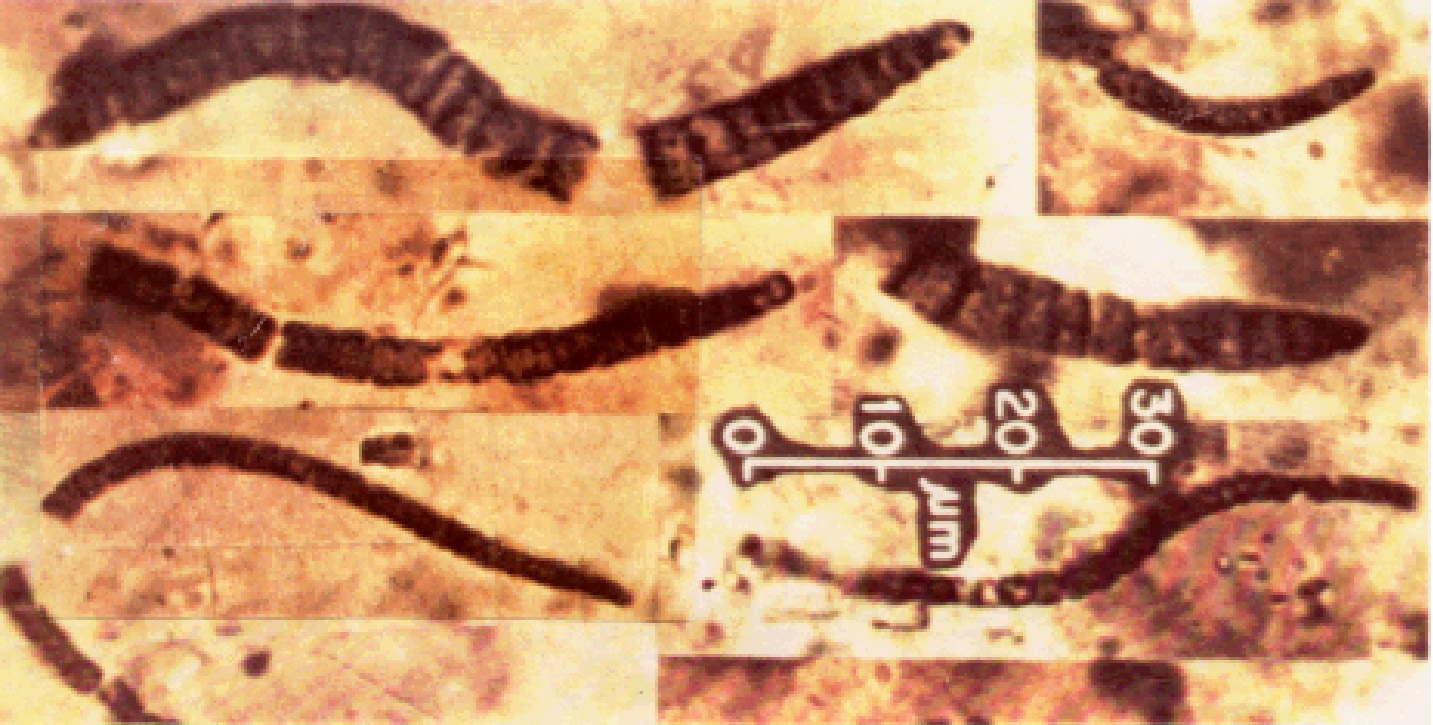
When enough of these photosynthesizing bacteria filled the oceans and shallow seas of the world, another simple living cell evolved and, possibly after experiencing a moment of food shortage, discovered how it could survive by consuming this highly abundant "plant-like" bacteria as a stable source of food. As soon as this living cell discovered an appetite for plant food, it became the first animal to appear on Earth. And not long after that, some cells discovered that it did not matter whether to consume plant cells for food. Why not consume the actual animal-like cells doing the plant-eating too? A reasonably reliable source of food no doubt as the numbers of "herbivore-like" animals increased. So maybe we have the origins of the first animal-consuming predator.
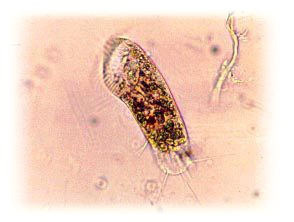
An example of an animal-like cell is protozoa, the oldest known animal fossil. Protozoa would swim or float around and consume smaller bacteria.
And why the need for any bacteria to "eat" (or consume) carbon dioxide or other bacteria? Because DNA needs a constant supply of raw materials from the "food" to rebuild itself and its cell structure for its continued survival (until such time as radiation or something else damages the cell structure and/or DNA beyond repair and must die). And it needs the energy to achieve these relatively selfish aims, which means the energy has to be obtained or captured easily from some source. Eating is about gaining energy and materials needed to repair and/or re-build the cell and produce enough DNA molecules to help retain the genetic information it has acquired to adapt to its environment. This is how the bacteria achieves a sense of balance (a terms commonly used by religious leaders) in the internal physiology. In that way, the bacteria will more likely achieve other aims in life, such as to reproduce or whatever.
In psychology, we also call this sense of stability and living a longer life after consuming food as achieving "happiness". To biologists, it just means that life can relax and not have to spend time in the here-and-now moment of searching for more food to stay alive/. Otherwise, it is an innate and constantly striving activity to consume and reach the point of feeling happy again. The only question is, how much consuming do cells need to stay alive? And can heavily consuming cells survive over the long time when periods of food shortages become a regular reality?
There have been observations of African tribes that eat a lot at the right times of the year in order to gain weight and extra fat for people to better survive and live long enough to get through periods of famine.

The concentration of carbon dioxide in Earth's atmosphere was at least 5 times higher than today with a density only about half that of present-day conditions.
2,750 to 2,000 MILLION YEARS AGO
Photosynthesising bacteria permeated virtually every corner of the world where the warm waters were abundant.
This was an interesting time when many of the pools on land and some large shallow seas turned a distinctly greenish colour (a striking contrast to the bluish oceans and possibly brown desert-like expanses of the great continents). This is clear evidence for the presence of countless millions of these ravenous photosynthesising bacteria.
The bacteria was also providing one other benefit for the single-celled animals emerging throughout the world. As a natural by-product of their photosynthesising work, the water was becoming oxygenated. In fact, so much oxygen was being produced by the bacteria that it slowly accumulated in the air, and so benefiting the development of more sophisticated animal life over the next 2,500 million years. At the same time, the minerals and rocks of Earth containing iron, manganese, uranium and other elements progressively oxidized as levels of oxygen rose.
As these primitive photosynthesizing bacteria continued its ferocious appetite for carbon dioxide, the atmosphere of the Earth nearly 2,750 million years ago had increasingly fewer greenhouse gases by way of carbon dioxide molecules to effectively trap the heat from the sun. This meant that the Earth was getting cooler. Luckily the orbit of Earth (in addition to the possibly high volcanic activity along regions where the thin, cool crust cracked) prevented the planet from heading towards an irreversible ice age during this epoch.
It is believed that clouds covering Earth finally broke-up sometime during the end of the epoch, and so benefiting the development of more sophisticated plant life the world has ever seen.
700 to 650 MILLION YEARS AGO
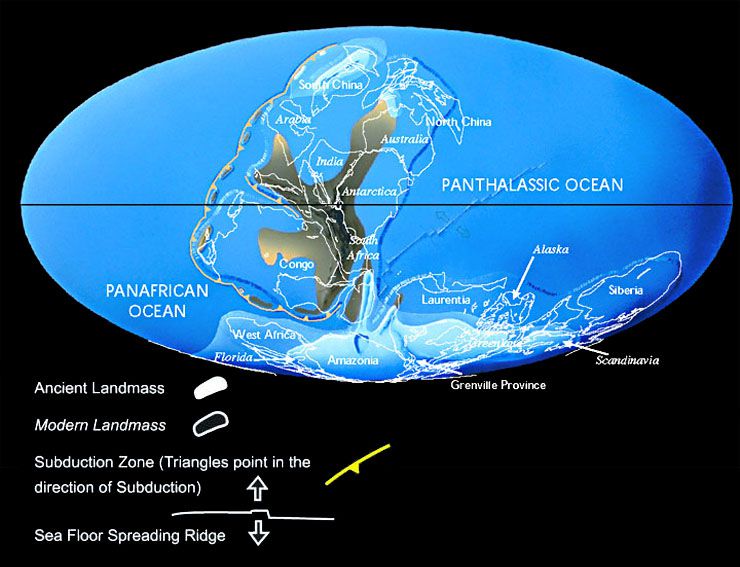
The Earth nearly 700 million years ago was warm and wet. An alien visitor looking intently at Earth at this time would notice through the break in the thick clouds a very large desert-like supercontinent lying north to south and across the equator as it drifted across the globe (assuming the planetary crust had tectonic plates). The only thing to suggest life might be appearing on this planet were the abundant photosynthesizing bacteria in the waters providing its greenish tinge.
As for the bacteria-sized animals floating in the water, these little critters probably didn't stay single-celled for very long. Perhaps in response to other animal-like bacteria consuming other bacteria, it is likely a group of cells came together in what may be considered the first multicellular life forms to exist on this planet. Again, it is not entirely clear whether any animals, single-celled or multicellular, had existed in the waters at this time. Too small to be visible to the naked eye, making it extremely difficult for scientists to find fossilized evidence of their existence.
However, there is a good reason for animal-like bacteria to become larger by grouping together with other cells. In the event a predator consumes one or a few cells, the entire multicelled organism can potentially survive the encounter and continue on to reproduce and achieve other tasks. The only thing that is important for these animals is to have a means of accessing enough food to help regenerate lost cells and continue to grow in size. A particularly good adaptation for photosynthesizing bacteria. Animals could benefit too. However, it seems there is a limit to the amount of regeneration possible. Some cells can be lost occasionally, but not too many. Yet at the same time, there is also another good reason for individual cells not to get too large or even the entire organism itself to acquire too many cells. The smaller you are, the less energy you require. If you need too much energy, the environment may not be too forgiving in having enough food to provide the energy needed to survive. Famine was still a regular and common event for life on Earth at this time. Also, the benefits of eating less and using less energy is that you can live longer, either because you were less of a target for the predators (and later you can be nimble to evade certain predators), but also because being too large can attract more radiation to the "body". The presence of extra radiation means there is a heightened risk of developing more mutations. Or else you must stay close to the sea bed to utilise the water as an effective radiation-shielding property. Another benefit in using less energy is that any energy you do expend would require oxygen to be used up. That means any animal trying to grow to a larger size would require more oxygen to be extracted from the water. However, as scientists have determined at this time, oxygen levels in the water and those in the atmosphere remained rather paltry to meet the extra energy demands of bigger organisms. As one wise person said, we all must learn to float first, then swim, followed by crawling, walking and eventually running in that specific order. And each action step in the mobility continuum would require an increasing amount of oxygen. With this in mind, we can naturally surmise that no animal would have dared got bigger than a microscopic organism while the oxygen levels in the water remained relatively low and the atmosphere still had a measly 1 per cent level in oxygen.
The world continued to be dominated by photosynthesizing bacteria (and possibly even plant-eating animal-like bacteria).
As the photosynthesizing bacteria continued to have the upper hand so to speak with their veracious appetite for carbon dioxide in the early stages, it was only a matter of time before the Earth began to cool down even further.
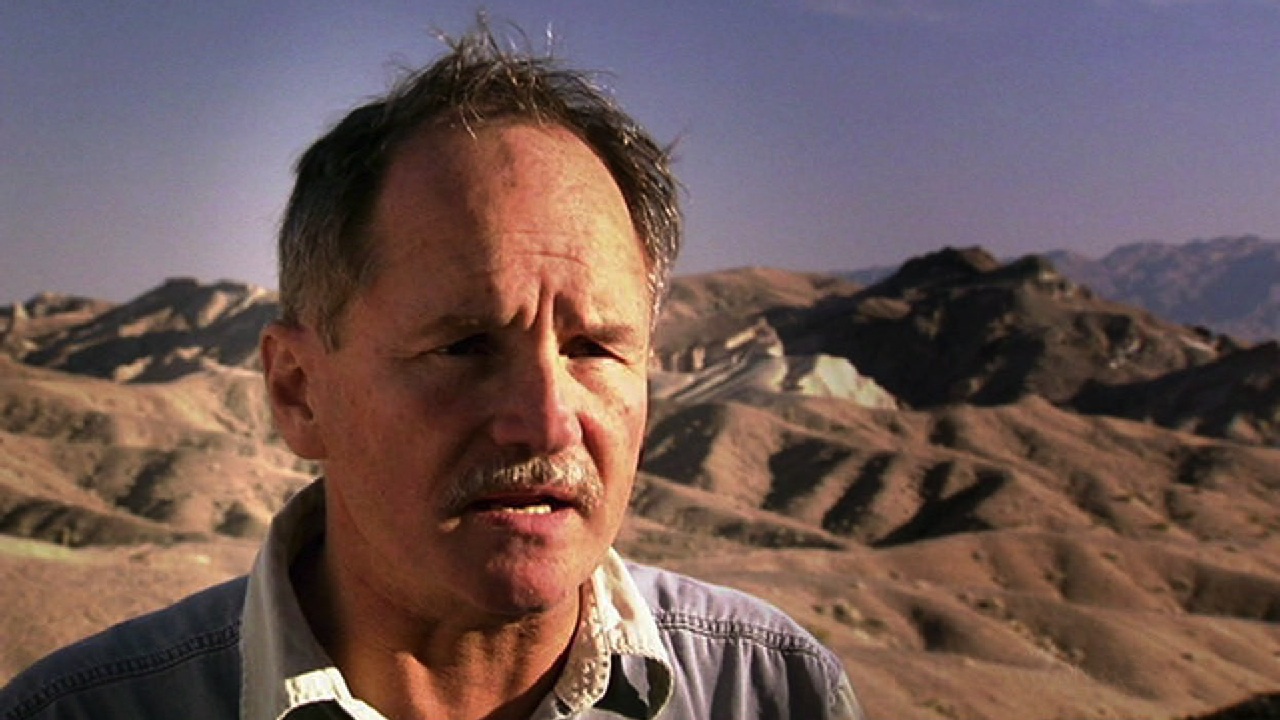
And eventually it did. In fact, the success of these little photosynthesizing bacterial critters in feverishly consuming the carbon dioxide in the atmosphere had probably caused the world's first and most massive glaciation ever seen in the history of the Earth around 650 million years ago. The world's greatest ice age saw ice sheets of several kilometres thickness move across the temperate latitudes and started to encroach into the tropical latitudes where the ice sheets reduced in thickness to probably a few metres to several hundred metres in places. There is even a strong possibility the ice may have closed up at the equator right around the planet (although not yet proven at this stage) leaving the planet in a state known as Snowball Earth (a term coined by geobiologist Dr Joseph Kirschvink after spending 20 years gathering evidence to support his theory of what happened at this time). For example, boulder rocks identified as having been moved and shaped in a common and highly characteristic way as seen in the debris left behind by glaciers in the Flinders Ranges in Australia and in Death Valley in the United States at a time when analysis of the residue magnetism in the rocks at time of solidification showed these locations were at or very near to the equator is suggesting the glaciers had probably existed at the equator. Even if it didn't, ice entering the tropical regions would have made this the most severe Ice Age the Earth has ever experienced. There is no question the population of "carbon dioxide" loving bacteria were decimated (or simply put into a state of suspended animation). Nevertheless, such severe conditions was not enough to end life on Earth. The extremophile nature of these bacteria suggests there were places where the bacteria could survive. And even then, the bacteria can undergo suspended animation in the frozen ice for as long as is necessary until such time when the ice eventually melted.
As it turned out, the time needed to melt the ice in a significant way would begin 25 million years later. And it would be enough time to achieve one other important event needed for the development of more complex lifeforms. At first the Sun's intense ultraviolet light hitting the icy surface would convert a significant amount of the water molecules near the top of the ice sheets into a chemical called hydrogen peroxide. Don't be fooled by this seemingly innocent-looking chemical. We should not underestimate the importance of this chemical to life on Earth. Scientists are now firmly of the belief that this chemical had crucial implications for life on Earth. It is just a matter of time before we would see the full potential of the chemical.
The potential of this chemical to assist in the development of life was realised when around 625 million years ago there was a sudden and significant global surge of massive volcanoes punching their way through the ice sheets. The volcanoes quite literally broke apart the great supercontinent in half along the equator (where the ice sheets were at their thinnest). Over the next million years, the volcanoes spewed out vast quantities of the familiar carbon dioxide into the atmosphere, not to mention the numerous minerals on the ground to be washed down to the oceans by the melting glaciers and ice sheets.
Things were beginning to warm up again.
As the ice turned into liquid water, hydrogen peroxide trapped in the ice would break down into hydrogen and oxygen gases. While the hydrogen gas escaped the Earth, it is the oxygen gas with its heavier chemical weight that would end up in the water and atmosphere. Scientists are certain a vast amount of oxygen was released through this non-biological method, so much so that probably as much as 20 per cent of the atmosphere contained oxygen.
625 MILLION YEARS AGO
As world temperatures warmed up to end the greatest Ice Age in Earth's history, oxygen levels in the atmosphere rose further to around 21 per cent. As the ice and massive glaciers melted, the fresh running water would have flowed over the edge of massive cliffs and down mountains. The well-oxygenated water would have reached the oceans.
At the same time, pulverised rocks from the movement of glaciers during the greatest ice age, and the more recent lava flows from massive volcanoes, would have washed into the oceans to provide additional trace elements. (11)
All these geological activities would have assisted life in the oceans in some way, whether to build and maintain healthy tissues or keep the organisms alive through the extra oxygen in the water. Clearly the door of opportunity for life to evolve into larger and more diverse forms had finally arrived for those willing to take it.
With the extra oxygen and trace elements loaded up in the oceans and seas, and carbon dioxide in the atmosphere had reached reasonable quantities to maintain adequate warmth and so keep much of the water in liquid form throughout most of the planet, this was a remarkably vibrant and creative time when life suddenly diversified, got physically bigger from the extra food supplies and oxygen, was able to detach from the bottom of the oceans or control the direction in which certain species could float with their primitive appendages (but not designed for speed and agility), began to crawl and eventually swim faster, and multiplied in great numbers as the first multi-cellular organisms made their appearance on the world stage. Among these new organisms were the first large multi-cellular animals to appear.
A bigger and more mobile body was clearly the order of the day for these animals. We must presume this was in response to predators and the need to evade them, and/or develop greater protection mechanisms against these predators for the more slower moving creatures, such as a tough outer shell and hardened armour plates and protrusions running along the spines to protect vital organs. Or else learn to hide underneath the sands, or behind rocks and caves. There is no doubt the explosion of diversity in the type of animals that appeared near the coastal regions and later the rest of the oceans and shallow seas would have resulted in many extraordinarily ingenious survival techniques to bamboozle predators as well as to maximise the chances of finding food in order to reach the goal of being happy and balanced, and later eventually reproduce with relatively ease and hopefully safely while the predators are not around to spoil the party.
As palaeontologist Dr Jim Gehling stated:
"After snowball Earth, we see a revolution in the history of life from the fossil record. Because for the first time, we see large creatures — creatures that anyone can see with the naked eye. They are the first [multi-celled] animals on Earth." (Quote taken from the documentary titled Catastrophe: Snowball Earth. Produced by Pioneer Productions for Discovery Channel and Channel 4 Television, ©2008)
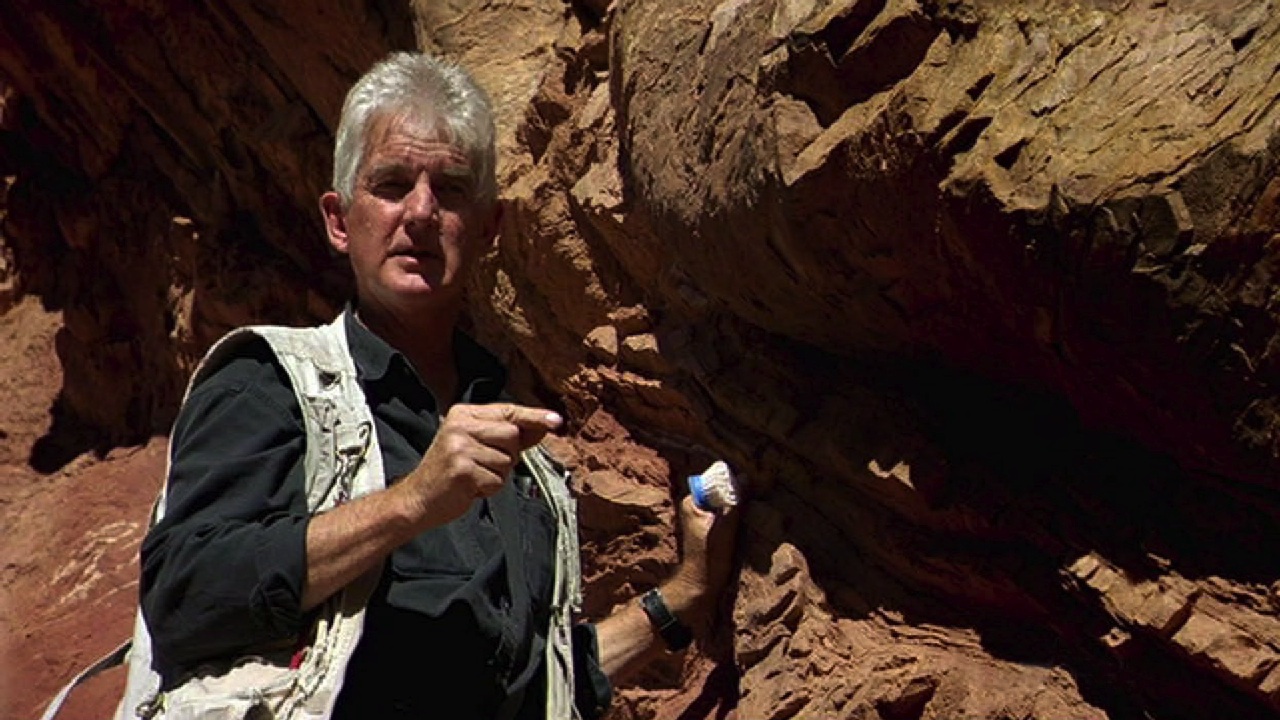
Not only were these large animals multicellular, so were the new plants coming up from the ocean floor with the existence of large sponges and seaweed. Does this mean life was already multicellular before the great Ice Age? It is possible. In which case, this incredible explosion of life after 625 million years ago was probably nothing more than an explosion of the body size and with the added advantage of some mobility due to extra oxygen in the water. Still, it remains unclear.
At any rate, the success of these new multi-cellular creatures was made possible only because a new cell had suddenly arrived on the scene with the idea of working together (or "socialising") with other similar cells as a means of maximising its own survival. In return for working together with others cells, the cell would receive what it needs to survive, be better protected from the environment, and so physically live for longer without having to change significantly and constantly than if it was on its own.
Of course, it does not mean a single cell cannot survive on its own. Bacteria today still remains of the single-cell type and one of the most successful organisms there is. It is just that the more social cells had other advantages.
As a general rule of thumb, the more independent the cell becomes, the more multifunctional and/or faster it has to change and adapt to a wider range of environmental conditions in order to survive. Stay socialised and protected in a group, and the cell won't need to change (or at least not as much as being on its own) and can, therefore, potentially live for longer. But in exchange for this stability and longevity, and in receiving the things needed to stay alive, the social cells must learn to be happy to fit in like a cog in a giant biological machine doing a specific task very well and without complaint. The perfect soldier to follow orders from its superior (i.e., DNA).
Already we start to see the benefits of why some cells may want to work together with other similar cells. Basically it is to be a little bit more lazy and better protected from the environment so long as it does its specific job very well. Beyond that, the cells act as a form of protection for the organism in the event a predator decides to take a bite. A loss of some cells is not likely to be fatal.
The process from single-called and multi-cellular clearly didn't happen overnight. It would appear that a natural string-like protein called collagen (only found in animals) was produced by a new single-cell to help capture like a spider-web a group of other single-cell bacteria to form a conglomerate of cells. Why? Because, as the cell had learnt after many millions of years, being anchored to clay surfaces in deep enough water or underneath the clay would provide significant protection from the radiation and with less agitation of the chemicals in the water (and potentially less likelihood of being eaten by predators). But if predators get smart and learn how these cells protect themselves, it is better to get a group of cells together and these can act in virtually the same way as ordinary clay, except this socialising of the cells has at least one major benefit: the cells don't have to stay in one spot. The cells can finally move off from the clay surfaces or wherever it is attached and start to move around more freely, initially with the help of the oceans currents, and later with the evolutionary growth of appendages to allow the cells to move where they want to (usually to where the food is and away from predators).
And, of course, the other benefit is obviously to improve one's chances of survival after an encounter with a predator or the ravages of high-frequency radiation to affect the DNA inside the cells. If only a few cells are sacrificed to satisfy the food requirements of the predator or had to be removed when the cells fail to do their work, then there is a very high probability the rest of the organism will survive.
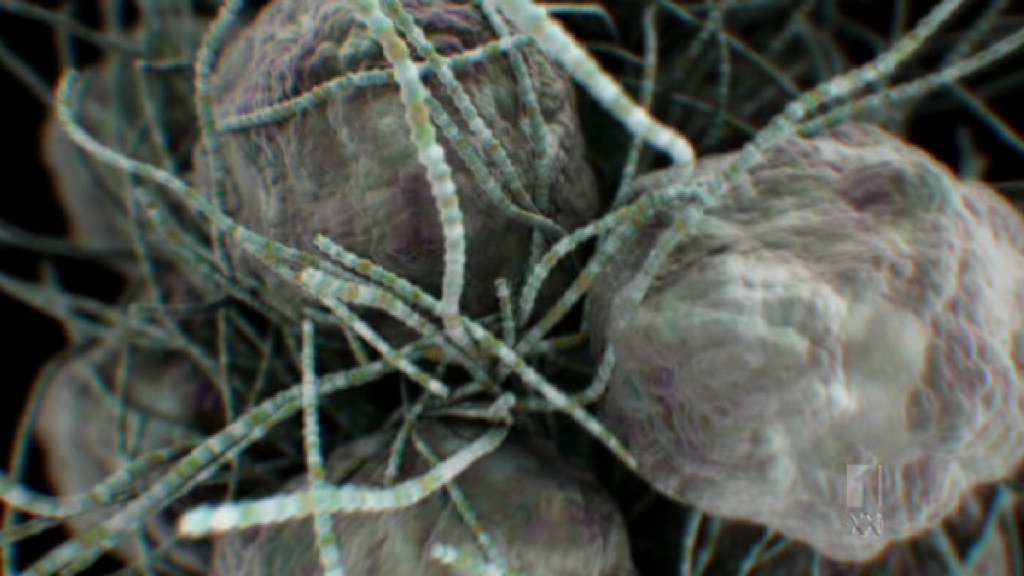
Yet the cells have to get close enough to realise the benefit of communicating with other cells (in order to do their tasks properly and in a unified way for the likelihood of staying alive and reproducing to be very high) by sending chemicals to one another. This is especially true the deeper the cells live beneath the oceans where food and oxygen is harder to obtain (perhaps yet another mechanism to escaping predators by going into tougher environments?). Therefore, it is possible a moment came when one of the cells was partially damaged that it allowed one of the single-cells to physically enter the damaged cell and remove its DNA so that the invading cell and its own DNA can become more better protected while directing the host cell to perform specific functions that made it easier to clump together at extremely close range with other similar cells. In other words, the inner cell can continue its selfish individualistic aim of protecting and replicating DNA at all costs, while the outer cell can be directed to find, bind and communicate with similar cells in order to give better protection and at the same time send chemical messengers of how to perform specific tasks.
For example, the very early forms of these animal-like cell conglomerates creating what we call an organism were initially anchored to the ocean floor with the fundamental aim of maximising the surface area in acquiring food from the water with as many cells as possible. We call these filter feeders. A classic example of this type of creature is the coral sponge.
Later these cells learned to co-ordinate a number of cells to move in unison in order to achieve what scientists call a rudimentary form of contraction as needed to "pump" and thereby increase the flow of the food-laden water through the conglomerate of cells.
As this energy-intensive pumping action was taking place, more oxygen would be needed. While cells did benefit from the extra oxygen in the water after the end of the great ice age and the extra food by staying together, there would be moments when food supplies would temporarily run low, forcing the cells to become more efficient and specialised in their functions. Those cells whose job was to extract and distribute oxygen to all other cells would form the beginnings of a cardiovascular system and quickly became very good at this task.
Later, in order to co-ordinate the multitude of contractions at the right times, other cells came together to send electrical impulses and other chemicals to various cells. It is clear these cells would show the beginnings of a nervous system for the organism.
Yet more changes would be needed.
The next stage would require this conglomerate of cells to free itself from the ocean floor or clay surfaces and let the ocean currents take the cells to places where the food supply was likely to be plentiful. However, if the body size is too great for any reason as some animals would discover when it needed extra oxygen and food, the creatures had to develop a way to move about independent of the ocean currents. Therefore, the ability of these cells to contract muscles inside external appendages would be crucial to developing independent movement of the organism. By doing all these things, the need to constantly change in order to adapt to a changing environment and other animals would diminish significantly after each major evolutionary step.
Before making the next ambitious leap so to speak from the ancient ocean floor to swim around in the water, animals crawling or wriggling across the ocean floor would develop the basic body plan of a head, a tail and a symmetrical body known as bilateral symmetry.
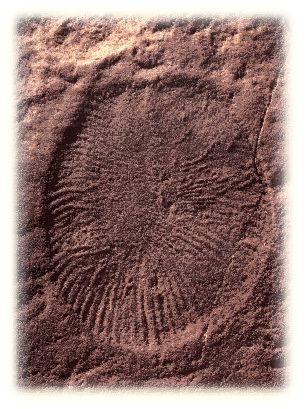
Then came the first animals to swim in the water. We call them fish.
So what drove these "social" cells to continue changing and become more complex in the tasks performed even if coming together would have reduced the need for change? What made these cells look like they were adapting or had to adapt (e.g. getting bigger, developing appendages, a more complex nervous system and eventually a bigger brain etc.) to the environment? Apart from searching for food, it was probably the presence of other living organisms competing for the same sorts of food, not to mention the impact predators (12) may have had on some living organisms to change and adapt and so help to cope and handle the predators in their own special way as a means of surviving for longer. By pushing animals to achieve more than what they think they can do does help to create micro-evolutionary improvements until such time as the DNA makes sufficient changes leading to a sudden evolutionary change for the better. Then the cells and the entire organism will find it much easier to adapt to the environmental conditions, such as being more efficient at some particular task or to better handle the attacks from marauding predators. Apart from radiation to force change in the DNA's genetic code, we are constantly pushed to change and survive through our choices partly because we want to stay alive long enough and be stable in our environment (i.e., be happy and feel balanced). In other words, we do not want to be eaten by predators. It is a simple fact of life.
As for the size of the organism, growing bigger does have a further benefit. While the oxygen levels were high, a bigger body made it possible for some animals to deal with a number of persistent predators that had yet to follow suit and do the same.
So essentially body size and the development of any external biological appendages means not only can some organisms out-muscle or out-grow, out-swim or evade predators with greater ease, but it can help to find more food (or perhaps the food was already in abundance) and this in turn may help to increase the physical size of the organism over time if the consumption is high.
Despite the great success of these social cells, the highly independent single-cell organisms would not disappear from the face of the Earth. They would continue to flourish side-by-side with the new "social" cells to the present day because of their ability to find new solutions and evolve (often more quickly) to handle the diverse, extreme and changing environmental conditions much better than the social cells. We can see evidence of the power of these single-cell organisms to adapt quickly in those bacteria resistant to human-made antibiotics. We have to remember that single celled organisms are just as successful in surviving on this planet as multi-celled organisms. Neither has a greater advantage over the other. But if advanced and intelligent life is to evolve and be capable of asking questions about its environment and find alternative solutions to the age-old problem of how to survive, only multi-cellular organisms would achieve it.
At any rate, these new 'social' cells were definitely more complex than their single-celled predecessors. Apparently, the cells grew in complexity with the advancement of a nucleus (the control centre of the cell) which contain additional structures needed to help master the art of socialising with its own kind of living cells while still maintaining some aspect of its individualism necessary to keep itself alive.
Soon countless numbers of these highly successful 'social' cells came together to produce simple "animals without backbones" known as the invertebrates. These included such things as worms and jellyfish. As for the plant-like cells, they combined to produce seaweeds and sponges to name a few.
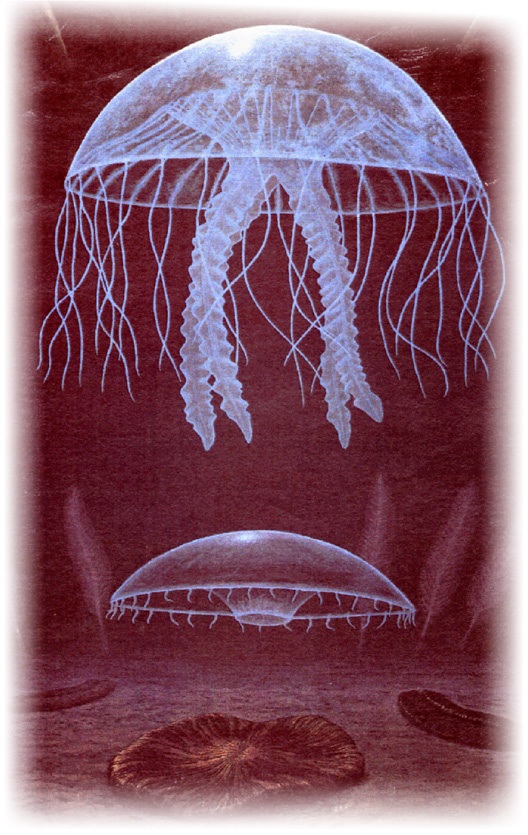
The eventual evolutionary progression from single-celled microbes to many-celled organisms may have taken a very long time — at least two billion years to accomplish this next biological feat — (unless the multi-celled organisms were already evolved, had been frozen in the great ice age, and made their comeback when the ice melted and scientists just don't know it from the fossil records) but once certain cells finally learned how to come together without eating each other and could specialise their functions to minimise changes while benefiting from the extra food and oxygen, the progression to multi-celled organisms took off at a very rapid pace. (13)
At the same time as multi-cellular animals were evolving into larger and more sophisticated forms after 625 million years ago, the nervous system of these animals had developed to the level of present-day jellyfish. The development of a nervous system is considered necessary to properly co-ordinate and handle the increasing amount of diverse and sophisticated functions that had to be performed by the multi-cellular organism as it adapted to new environmental conditions in the oceans, including other advanced lifeforms carving out their own existence.
600 MILLION YEARS AGO
Two large supercontinents drifted across the globe. They would later join-up in another 400 million years to once again form another great land mass.