23 MILLION YEARS AGO
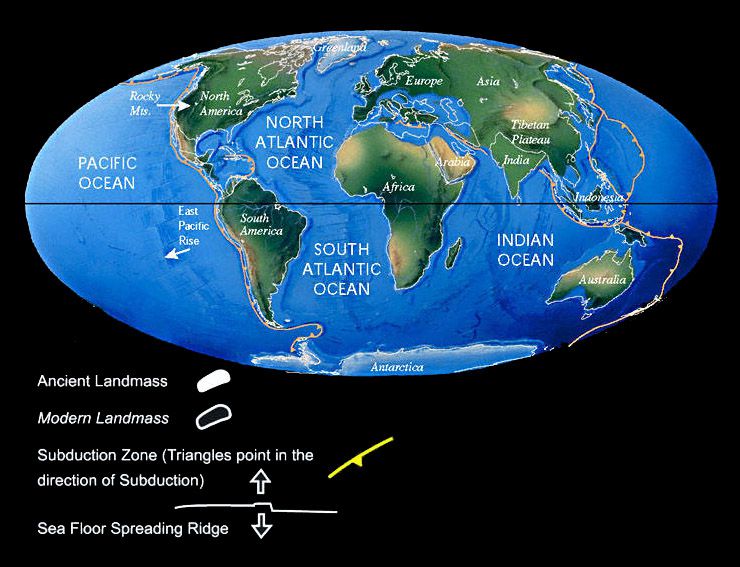
The start of the Miocene epoch is marked by the development of the East African Rift (EAR). It is an active continental rift zone designed to eventually split the African tectonic plate into two called the Somali Plate and the Nubian Plate. Measurements in modern times has revealed a separation rate of 6 to 7 millimetres per year. As the tectonic plates separate, two mountain ranges were formed by around 8 million years ago. The consequence of this geological activity is that rainfall would decrease east of the continental rift zone, leading to fewer trees. Despite this change, it would provide a motivation for certain primates to adapt to the new environment and see the advantage in walking upright on two feet on the ground when moving from tree to tree in search of food.
15 MILLION YEARS AGO
The Antarctic continent has moved sufficiently to the south to become fully covered with ice.
As ice sheets expand in the southernmost continent, sea levels drop. This caused some sea-faring creatures to become trapped inland. The classic example were dolphins that learned to adapt to freshwater in central Australia where a huge inland sea had existed. It is also claimed that Australia began to experience drier conditions from this moment on as the inland sea slowly began to shrink in size. The inland sea continued to exist far longer than expected due to the tall mountain range along the eastern side of the Australian continent that helped to create clouds and extra rainfall. The water descended to the ground and travelled along the great river systems on the western side of the mountain range to substantially replenish the inland sea. However, the effectiveness of the mountain range to keep producing regular rainfall would be depended on the mountains' height. As the active volcanoes died out, long periods of time would pass, causing the Blue Mountains to weather down to size The chances of regular and intense rainfalls would diminish over time. Eventually the island sea would also diminish in size and eventually become virtually non-existent except for the most wettest periods every 7 or so years during what scientists call the "El Nina" conditions as warm waters in the Pacific reach the eastern Australian coast.
NOTE: Should sea levels rise again, the inland sea will likely be replenished with saltwater and greater rainfall will appear in the summer times. Combined with global warming in the 21st century, the conditions will become more sub-tropical through much of south-east Australia. Until that great time arrives again when the environment will be lushes and bushfires will be a thing of the past, Australia will remain in the 21st century one of the driest and most bushfire prone continents on the planet only exacerbated by greater tree clearing, greater profit mentality, and a higher human population level trying to etch an existence in this fragile Australian landscape.
13 to 10 MILLION YEARS AGO
Temperatures dropped substantially across the globe. Large glaciers appeared on the Antarctic continent, arctic North America, and other areas. Whether this cold period is the result of (i) renewed mountain building; (ii) sudden plant growth throughout the world; (iii) a reduction in energy output from the Sun; or (iv) the possibility that the Earth is wobbling along its orbit after an asteroid had impacted with it (or a massive volcano had erupted), scientists can only speculate at this time.
The great whale predators were among the 20 per cent of animals to become extinct at the time the first glaciers appeared on Antarctica.
10 to 5 MILLION YEARS AGO
Nearly 10 million years ago, most of Africa was covered by a vast and thick forest, especially near the equator and going down south a fair way. However, as time passed and the commencement of a glacial period in the late Miocene epoch as well as mountain building in eastern Africa, the forests gave way to fewer trees and more open plains. Further north these patchy tree coverage would be fewer and far between due to the increasing rain shadow effect brought on by the Himalayan mountain range.
Now our earliest ancestors started to come down from the trees and learned to adapt to the harsher, more open landscape. A necessary adaptation in order to find more food and to keep away from the competition from our chimpanzee cousins.
Indeed, it was about 7 million years ago when the lineage leading to modern humans broke away from the chimpanzees &151; our oldest surviving relatives. At the time the break away species appeared, we still relied on the trees for protection and to sleep. But as the trees began to thin out, we got bolder and riskier in our attempts to move from tree to tree and gathering food on the ground by walking across the ground.
6 MILLION YEARS AGO
In September 2004, a French-led team of scientists studied part of the left thighbone of a chimp-sized human-like hominid that lived in Kenya on the great African continent over 6 million years ago. Dubbed the Millenium Ancestor (or the more scientifically-correct term of Orrotin tugenensis), this hominid has been found to have the ability to walk upright on two legs for a substantial part of its life. This creature is certainly considered by scientists to be our ancestor, and for good reasons too.
Originally found by French scientists in 2000, the bones of Orrotin tugenensis were independently analysed by American scientists to help determine the age of the bones and whether the creature could have walked upright by measuring the bone thickness in the upper and lower portion of the thigh bone. Now the results are in and the facts are truly amazing. The thickness of the bone in the part that meets the ball in the thigh was said to be thinner than the bone meeting the knee joint by a ratio of 1 to 3 according to CAT scans. For modern humans, the ratio is at least 1 to 4. For modern chimpanzees and gorillas that still rely on walking mostly on four legs, the ratio is approximately equal.
The conclusion is virtually undeniable: this 6 million year old hominid could and probably did walk upright for much of its life.
As Dr Robert Eckhardt of Pennsylvannia State University, which led the CAT scan team, said:
"In present-day chimps and gorillas, the thickness in the upper and lower parts of that bone are approximately equal.
'In modern humans the bone on top is thinner than on the bottom by a ratio of one to four or more. The ratio in this fossil is one to three. We have solid evidence of the earliest upright posture and bipedalism securely dated to 6 million years." (1)
UPDATE
2002
Scientists have found the remains of a 7-million-year-old skull named "Toumai" in the central African country of Chad. What has excited the scientists with this find is in the shape of the teeth and jaw — it looks remarkably human. Yet the rest of the skull looked nothing more than those of an oversized chimpanzee. This is the oldest skull to have this human/chimpanzee combination feature and some scientists are claiming it could be a direct link to our earliest known ancestors.
UPDATE
April 2005
Scientists have officially confirmed with the help of computer reconstruction of the skull and jaw that the creature named "Toumai" is indeed more human than ape. This means the skull could be our oldest known ancestor. And it is possible this creature may have walked upright.
4.4 MILLION YEARS AGO
During this time, one species of primate appeared known as Ardipithecus Ramidus (also known as Ramapithecus). This 50kg primate is considered by some authorities to be one of the earliest hominids and quite likely our human ancestor living around 4.4 million years ago. The evidence for saying this creature is probably our ancestor can be seen from their teeth and jaw structure. Early forms of the creature suggest that they lived largely in the tropical forests because of their large projecting canine teeth which was used to tear soft plant material (and for males to show dominance and fight other males). But the emergence of Ramapithecus, although still ape-like, had canines that did not project beyond the other teeth, and so the whole set of teeth seem to be designed more for grinding tougher, more fibrous foods found commonly in the open and drier grasslands of the open grasslands.
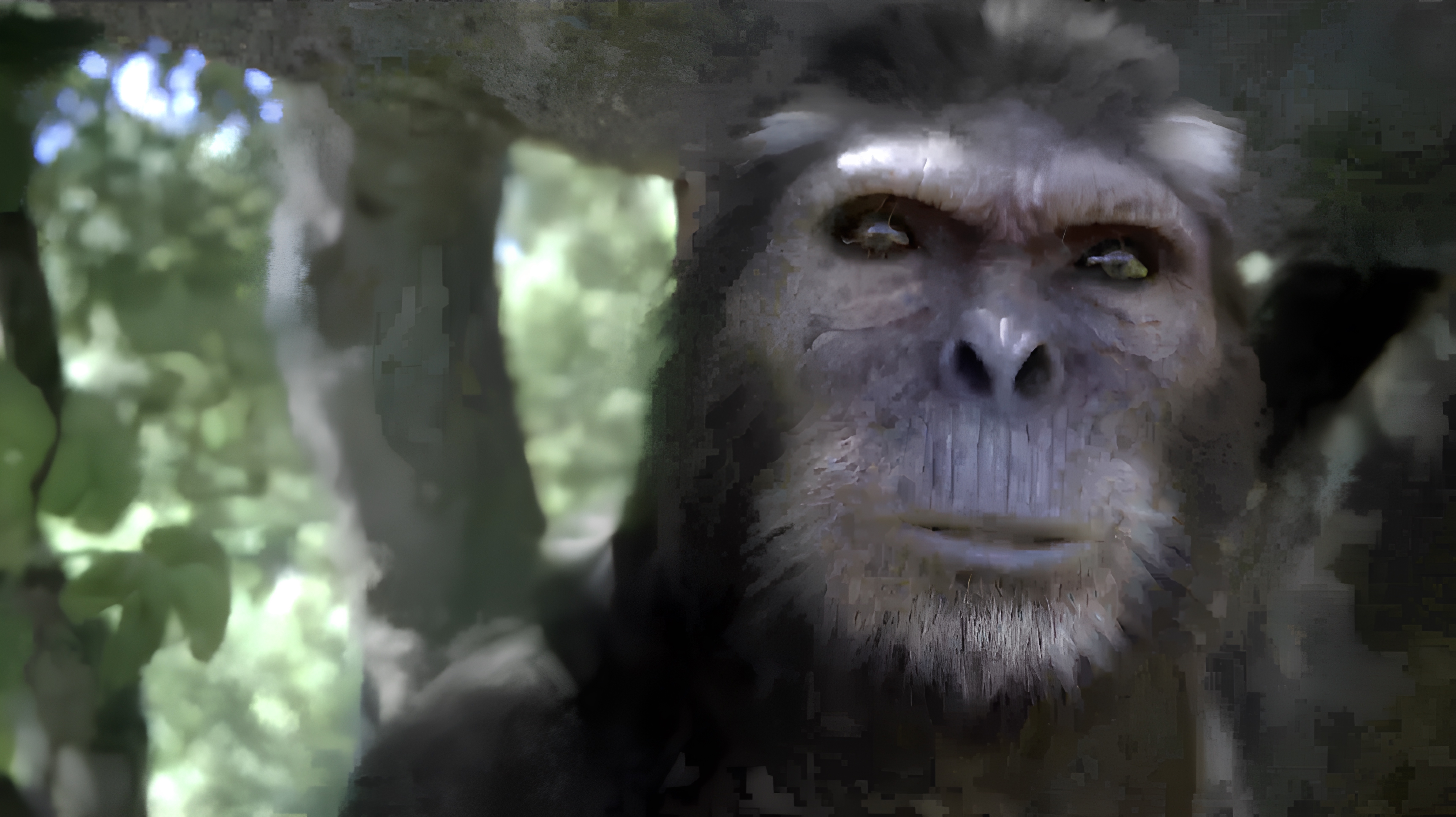
(Source: Out of the Cradle (2018) produced by NHK).
Indeed, it is likely Ramapithecus was a slightly more advanced version of Orrotin tugenensis, having evolved to be a taller species (even though it probably stood not much more than 120cm) capable of surviving longer by standing up and surveying the countryside at ground level much better in order to identify predators and to find food, even though it still relied on trees for shelter and protection.
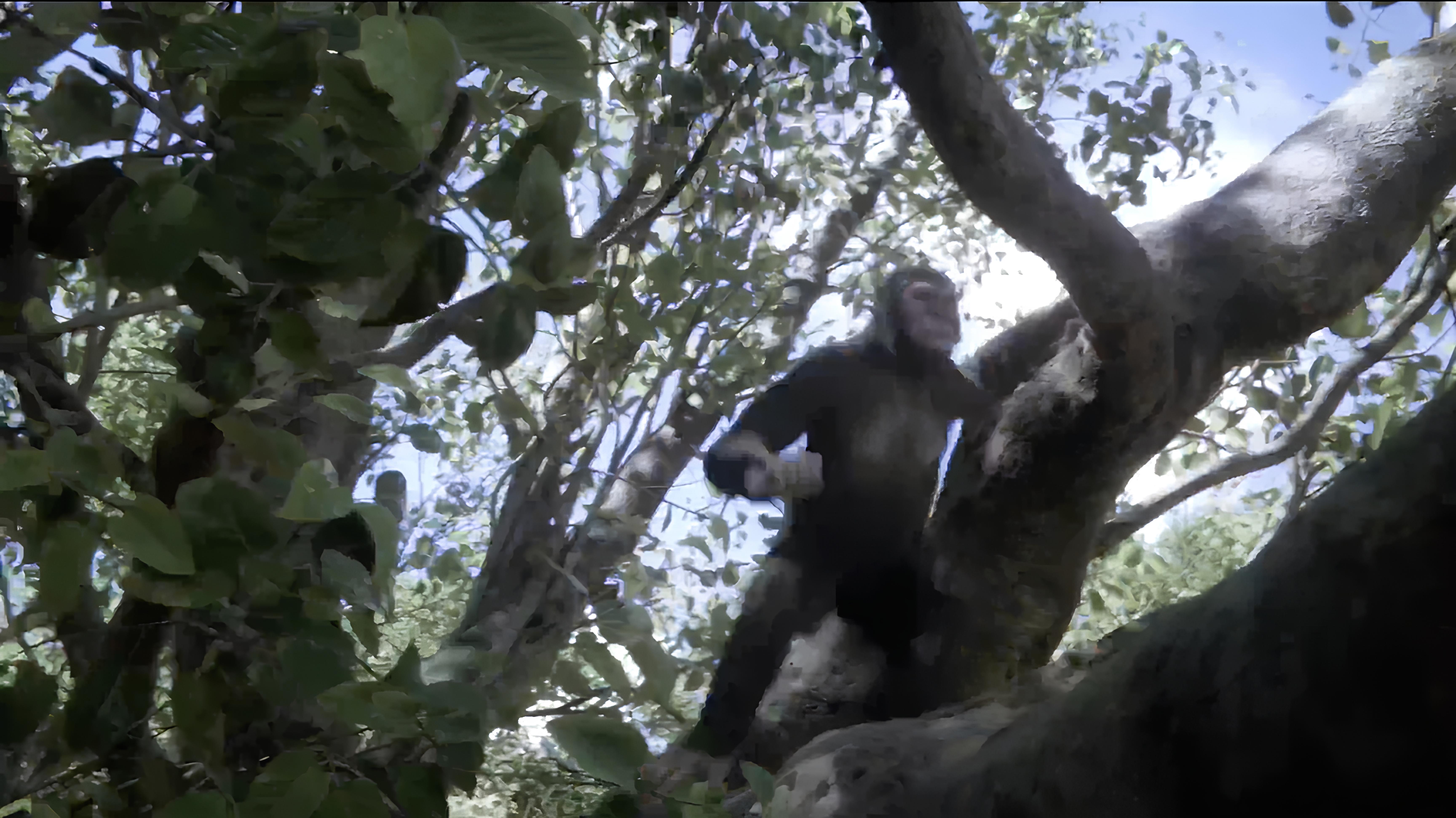
(Source: Out of the Cradle (2018) produced by NHK).
Another clue to the human connection can be found in the thigh bone of Ramapithecus. It was found to be midway between a chimpanzee and a human. In other words, the thigh bone was getting wider and shorter compared to the narrower and longer thigh bone of chimpanzees.
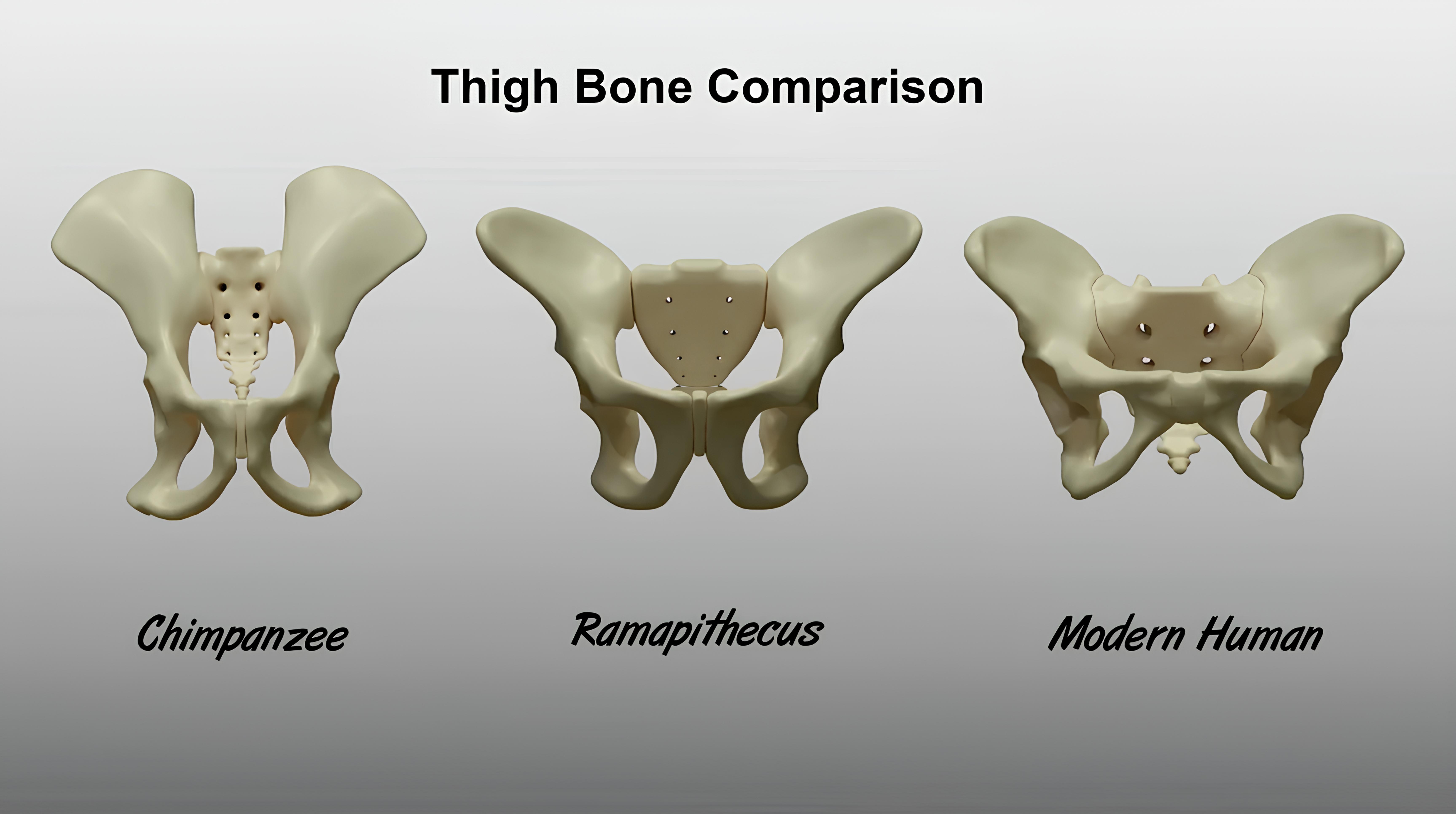
(Source: Out of the Cradle (2018) produced by NHK).
NOTE: With so many prehistoric skulls of the hominid variety uncovered in Africa, the continent has been described as the cradle of mankind. DNA evidence would later support this picture.